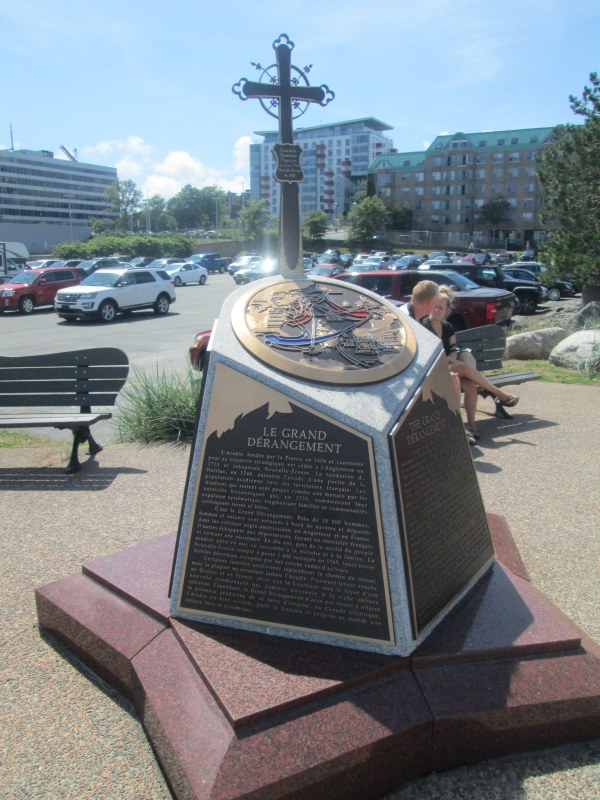
I just had to stop and take a picture of this sign. It reminded me of my Mother.
She was married a few times--her daughters are not sure of the exact number--but anyway, she had a great sense of humor about her marital ups and downs. One time she bought a used car and it sported a bumper sticker that read, "Where's Chester?" She didn't know any Chester but people were always asking her what the sticker meant.

One day, in all seriousness, she informed an elderly lady acquaintance of hers, "Chester was my third husband and I have been looking for that scoundrel for years!"
She loved the startled response from her friend so much that she continued to use that line from then on.
I would love to be able to call her and tell her, "I finally found Chester."

And it was a beautiful setting as well. The little coastal towns that surrounded St. Margaret's Bay and Mahone Bay to the southwest of Halifax are easy to reach by following a rather narrow, winding, but very scenic road.

I stopped here for lunch and sat at a table under the tree to the right in the photo. The signs you see attest to their great skill at making sandwiches. I didn't think mine was that great.

But the view was worth the price.

One of the islands in this bay is Oak Island--the legendary "Money Pit" where some unknown vast treasure is supposedly buried. The stories are endless of great wealth from Marie Antoinette's jewels, Ark of the Covenant, Captain Kidd's booty, to the Holy Grail. I think the treasure is in how much money has been spent looking for it. I did not take the tour to see the 'Pit' but there are TV crews on the island and if a treasure is ever found I am sure I will be able to see it on TV.

Anyway, this is the real treasure.

Mahone Bay is a beautiful little town that rivals Palmyra, N.Y. for its many churches.
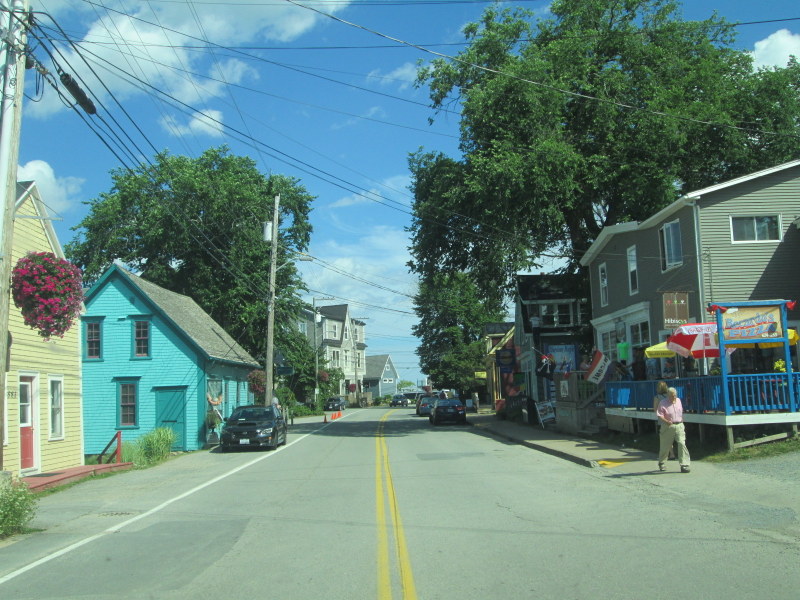
The main street was rather narrow and there was no place I could park without blocking part of it...

So I ventured on. I wasn't in the mood for shopping anyway.


In 1753 Lunenburg was settled by German, Swiss and French colonists.

The bright colors are everywhere and the homes have been lovingly cared for.

Lunenburg was obviously a wealthier town and there is a good reason for it.

From 1920 until 1933, the sale of alcohol was prohibited in the United States. This prompted a demand for smuggled liquor which proved to be a lucrative business for organized crime in the United States and for Nova Scotian fishing vessels and their crews.

They would load barrels of liquor on their boats and transport their valuable cargo to just outside the U.S. 12-mile limit where it was transferred to smaller American craft for the 'run' to shore.

Although dangerous work, it was legal for the Canadians as long as the Canadian vessels did not enter United States territorial waters. It paid better than fishing and provided a boost to the Town's economy during the Great Depression.

Once again we see evidence that prohibition as it relates to man's indulgences only fuels the fire.

If only we could learn by our past over-reactions.

Anyway, Lunenburg turned out to be the wealthiest coastal town of all that I had seen in Canada.


I loved this British comedy.

I found a place to park then two cars hemmed me in so tight I had to wait an hour for one of them to move.

I walked.
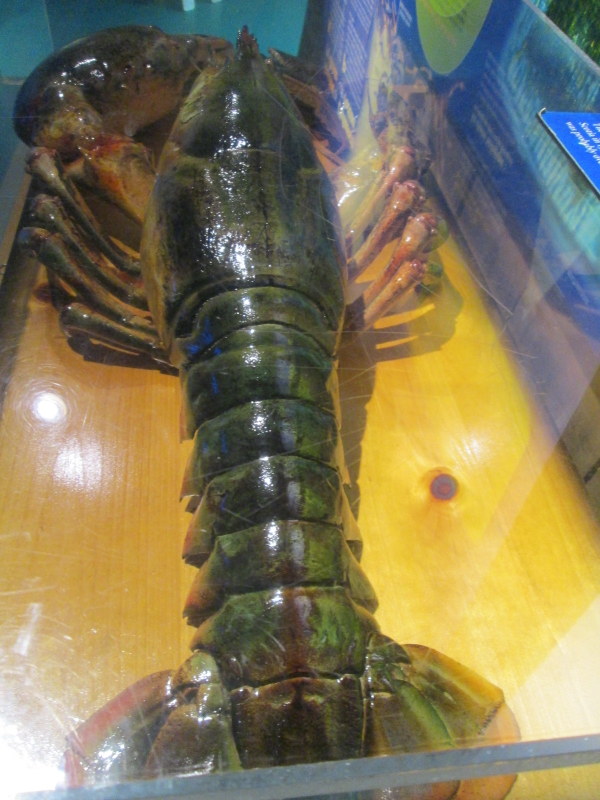
This lobster was caught on Georges Bank, it weighed 25 lbs. The largest recorded lobster was caught off Nova Scotia in 1977. It weighed over 44 lbs and was probably more than 50 years old.
I suspect there are very few of these mega-lobsters left. I have seen hundreds of the one-pounders in stores and restaurants.
(All items in italics are from the printed materials handed out by the communities)